More organised composting
Beneficial microorganisms are integrated into suitable organic-residue handling alongside control of input material, moisture, structure and turning.
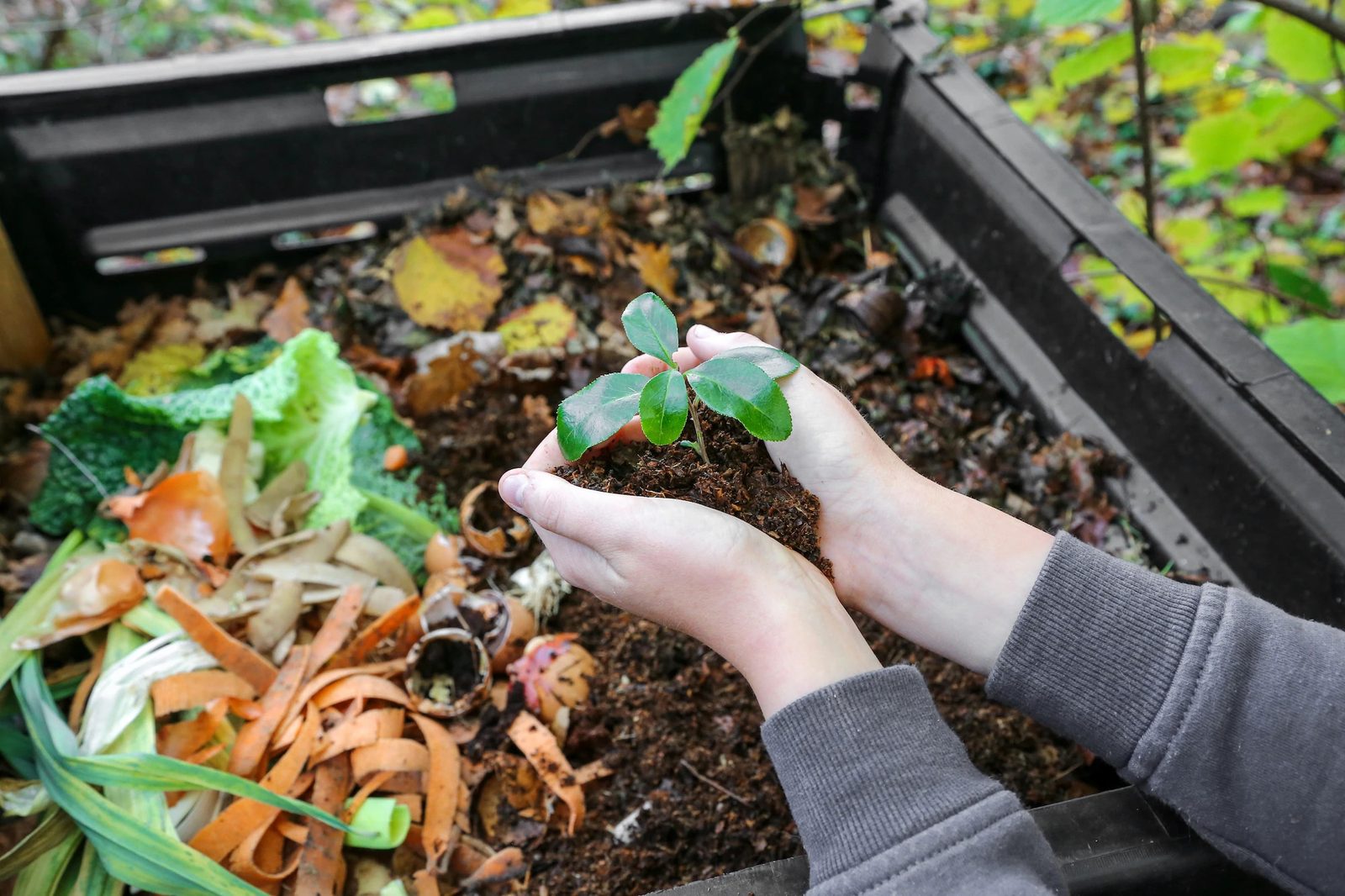
MUNICIPAL SYSTEMS / WASTE TREATMENT
Beneficial microorganisms can be integrated into composting, sludge handling and selected municipal processes when the material, goal and workflow are clearly defined.
Waste type, moisture and storage determine where biological treatment fits and how to integrate it into everyday operations.
A clearly defined biological-treatment point
More organised handling of organic material and sludge
More consistent process observation at the site
Beneficial microorganisms are integrated into suitable organic-residue handling alongside control of input material, moisture, structure and turning.
For sludge, soil or water, the approach is tied to known loading and site conditions, supported by available analyses and existing procedures.
Odour, organic material and leachate treatment are considered across the whole stream, from the source to the application point.
Application
Without beneficial microorganisms, organic waste in a landfill putrefies — with odour, insects and leachate. eMB preparations shift breakdown into a fermentative process that is faster and free of unpleasant odours.
Manure composting and home composting are covered in separate guides.
Separated organic waste is treated when the compost heap is built and again when it is turned after 8 weeks. The compost is ready in 6–8 months.
Treatment covers the whole landfill, the active tipping area or the area for slaughterhouse and similar waste — using truck or tractor sprayers, a motorised atomiser or a hand sprayer, depending on the terrain. Frequency (daily, weekly, monthly) and dilution depend on the season and are set with the EM Plus team.
Soil, sludge and water bodies degraded by oil, industrial waste and other harmful compounds can be bioremediated with beneficial microorganisms — on site or at a safe location. After analysis the process continues or ends, with a proposal for where to dispose of or reuse the remediated material.
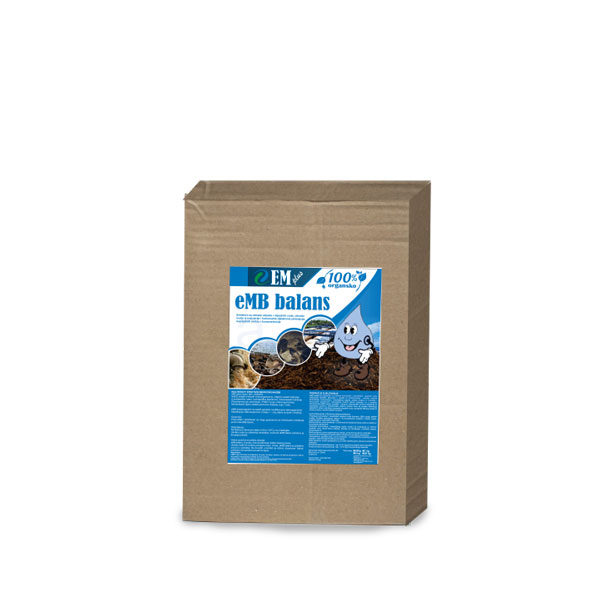
The eMB range is intended for waste, sludge and composting applications — send your process description so we can guide selection.
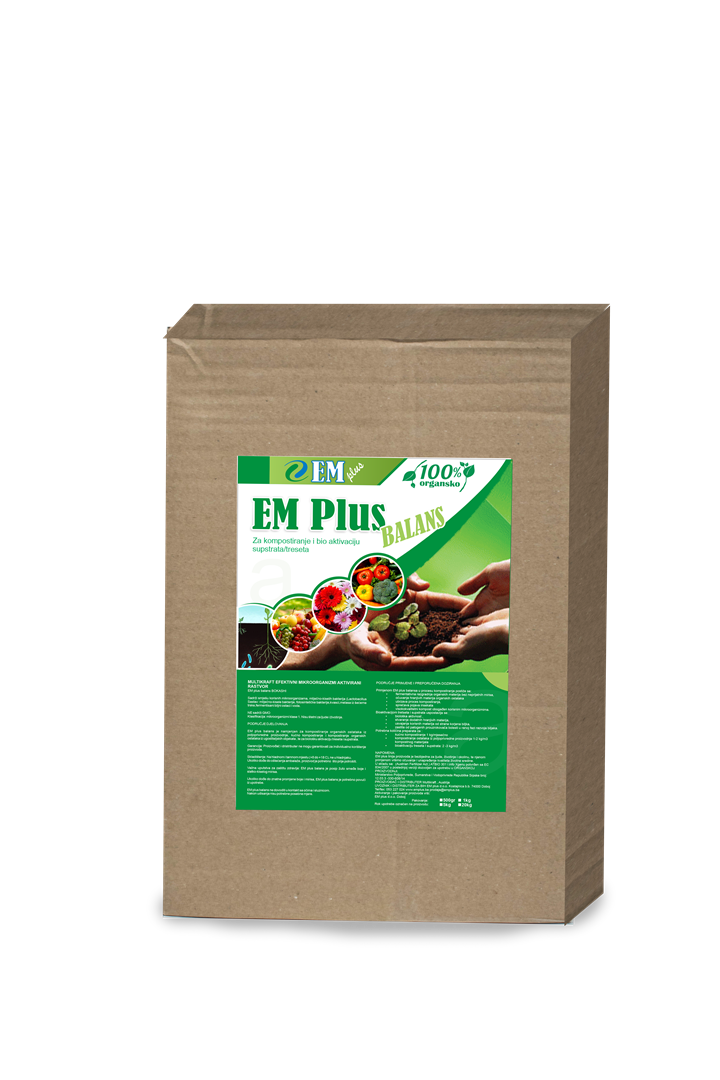
EM Plus product
From 9,80 KM 2 packages
View product ↗Dealing with odour, sludge or an inconsistent organic stream? Describe the process and problem point.
Record its origin, composition, moisture, storage and changes during operation.
Connect the product with mixing, the compost mass, sludge or another part of the current process.
Observe odour, material condition and operating notes, then adapt the routine to actual conditions.
FAQ
Primarily suitable organic residues, compost mass, sludge and selected municipal or industrial streams.
The input composition, moisture, structure, mixing method and available process area are important.
It can be considered when the material flow, application point, equipment and treatment goal are known.
Send the origin and composition, storage or processing method, available analyses and operating constraints.
Send the material, site and current-process details for initial guidance on biological treatment.
Related areas